
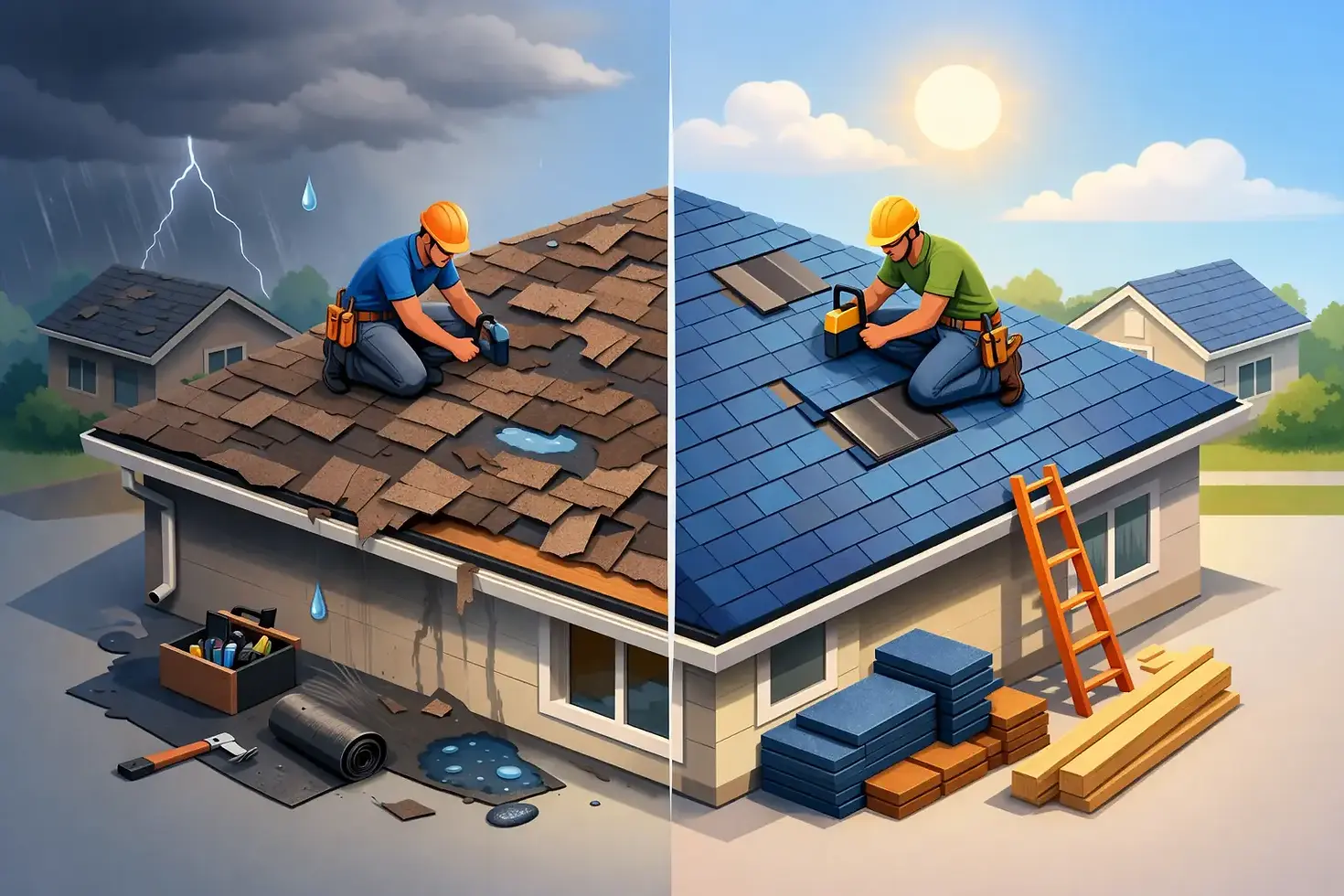
Roof Replacement: When to Repair or Replace

A stain on the ceiling after a hard rain is easy to ignore once it dries. The problem is that roof damage rarely stays small for long. If you are weighing roof replacement, the real question is not just cost. It is whether your current roof can still protect your home the way it should through the next storm, winter freeze, or summer heat.
For homeowners in Suffolk and Nassau County, that question matters even more. Coastal weather, wind-driven rain, salt air, and seasonal storms all put steady pressure on roofing systems. A roof is not just shingles you see from the street. It is a full protection system made up of decking, underlayment, flashing, ventilation, gutters, and the areas where the roof meets chimneys and skylights. When one part starts to fail, the rest of the house can follow.
When roof replacement makes more sense than repair
Not every roofing problem means you need a full replacement. A few missing shingles after a storm, isolated flashing damage, or a small leak around a vent may be repairable if the rest of the roof is in solid condition. Good repairs can buy meaningful time.
But there is a point where repairs stop being practical. If leaks keep coming back, shingles are curling or breaking across multiple sections, or the roof is nearing the end of its service life, repeated patchwork often costs more over time. You are not just paying for another fix. You are also accepting the risk that water may already be getting into the decking, attic, insulation, or wall system.
Age matters, but it is not the only factor. Some roofs fail early because of poor ventilation, storm impact, bad installation, or neglected maintenance. Others last longer than expected because they were installed correctly and inspected regularly. That is why the right decision starts with a real inspection, not a guess based on a number of years alone.
Signs your roof replacement should not wait
One leak does not always mean the whole roof is done. Multiple problem areas usually tell a different story. If you are seeing water stains in more than one room, granule loss in gutters, sagging roof lines, or shingles that look brittle and uneven, your roof may be beyond a simple repair.
Outside, look for shingles that are cracked, lifted, or missing in repeated areas. Check the flashing around chimneys, skylights, and roof penetrations. These are common weak points, especially after storms. Inside the attic, signs like damp insulation, mold growth, daylight showing through boards, or musty odors suggest that the roof system is no longer keeping moisture out the way it should.
Storm damage deserves special attention. Wind can loosen shingles without tearing them off completely, which means the damage is easy to miss from the ground. Hail and flying debris can shorten the life of a roof even if there is no immediate leak. After severe weather, a professional inspection can help determine whether targeted repair is still realistic or whether replacement is the safer long-term move.
What a full roof replacement actually includes
Homeowners sometimes hear the word replacement and picture only new shingles. A proper roof replacement is broader than that. The existing roofing materials are removed so the structure underneath can be checked for hidden damage. If the decking has soft spots, rot, or water damage, those sections should be replaced before new materials go on.
From there, the roof is rebuilt as a system. That includes underlayment for moisture protection, flashing at transitions and penetrations, ventilation components that help regulate attic temperature and moisture, and the roofing material itself. Gutters, chimney areas, skylights, and siding connections may also need attention depending on the condition of the home exterior.
This matters because a new roof is only as good as the details around it. A quality shingle installed over compromised decking or paired with failing flashing will not perform the way it should. The goal is not to make the roof look new for a season. The goal is to restore dependable protection.
The cost question homeowners always ask
The cost of roof replacement depends on the size of the roof, the pitch, the number of layers being removed, the condition of the decking, and the complexity of features like valleys, chimneys, and skylights. Material choice also plays a role. So does access to the property and the extent of storm-related damage.
What matters more than the cheapest number is what the estimate actually covers. A low quote may leave out needed decking replacement, ventilation improvements, flashing work, or cleanup. That can create expensive problems later. A clear estimate should explain what is being removed, what is being installed, what hidden damage could affect final pricing, and how the roof system will be protected at vulnerable points.
For many homeowners, the better way to think about cost is risk. Delaying replacement on a failing roof can lead to interior water damage, insulation loss, mold issues, damaged framing, and repairs to ceilings or walls. What starts as a roofing issue can quickly become a broader home repair problem.
Roof replacement and curb appeal both matter
Protection comes first, but appearance still matters. An aging roof can drag down the look of the whole property, even if the siding and landscaping are in good shape. New roofing can sharpen the exterior, improve resale appeal, and make the home look properly maintained.
That said, looks should not drive the decision by themselves. Some roofs are discolored or worn-looking but still structurally serviceable. Others look acceptable from the curb and are already failing around penetrations or under the surface. This is another reason inspection matters. You want a recommendation based on condition, not just appearance.
If you are already planning exterior improvements, it can make sense to coordinate roofing with gutters, skylights, chimney work, or siding repairs. These systems meet at critical points, and handling them together can reduce future disruption and help avoid mismatched repairs.
How to choose the right contractor for roof replacement
A roof replacement is not the place for vague answers. Homeowners should expect direct explanations, a written scope of work, and a contractor who can explain what they found during inspection and why they are recommending repair or replacement.
Ask how the roof deck will be evaluated, what underlayment and flashing details will be used, how ventilation will be addressed, and what happens if hidden wood damage is uncovered. You should also ask about cleanup and debris removal. Roofing work affects the entire property during installation, and the process should be managed carefully.
Local experience matters too. Roofs in Suffolk and Nassau County face conditions that are different from inland markets. Wind exposure, storm response, and moisture management all need to be considered. A local contractor who understands those conditions is better positioned to recommend a roofing system that fits the home and the environment.
For homeowners who want a straightforward inspection and a free estimate, Proper Construction Corp can assess the roof, explain the condition clearly, and recommend the right next step based on the home rather than a one-size-fits-all pitch. You can learn more at https://Properconstructioncorp.com.
What to do if you are not sure yet
If you are unsure whether you need roof replacement now, do not wait for a major leak to force the decision. Schedule an inspection while the problem is still manageable. That gives you time to understand the roof's condition, compare options, and plan around your budget instead of reacting during an emergency.
Sometimes the answer will be repair and continued monitoring. Sometimes it will be replacement before the next storm season. Either way, clear information helps you protect the house, avoid surprise damage, and make a decision with confidence.
A roof does not need to collapse to tell you it is done. More often, it gives small warnings first. Paying attention to those warnings is one of the simplest ways to protect your home, your investment, and your peace of mind.


Comments