
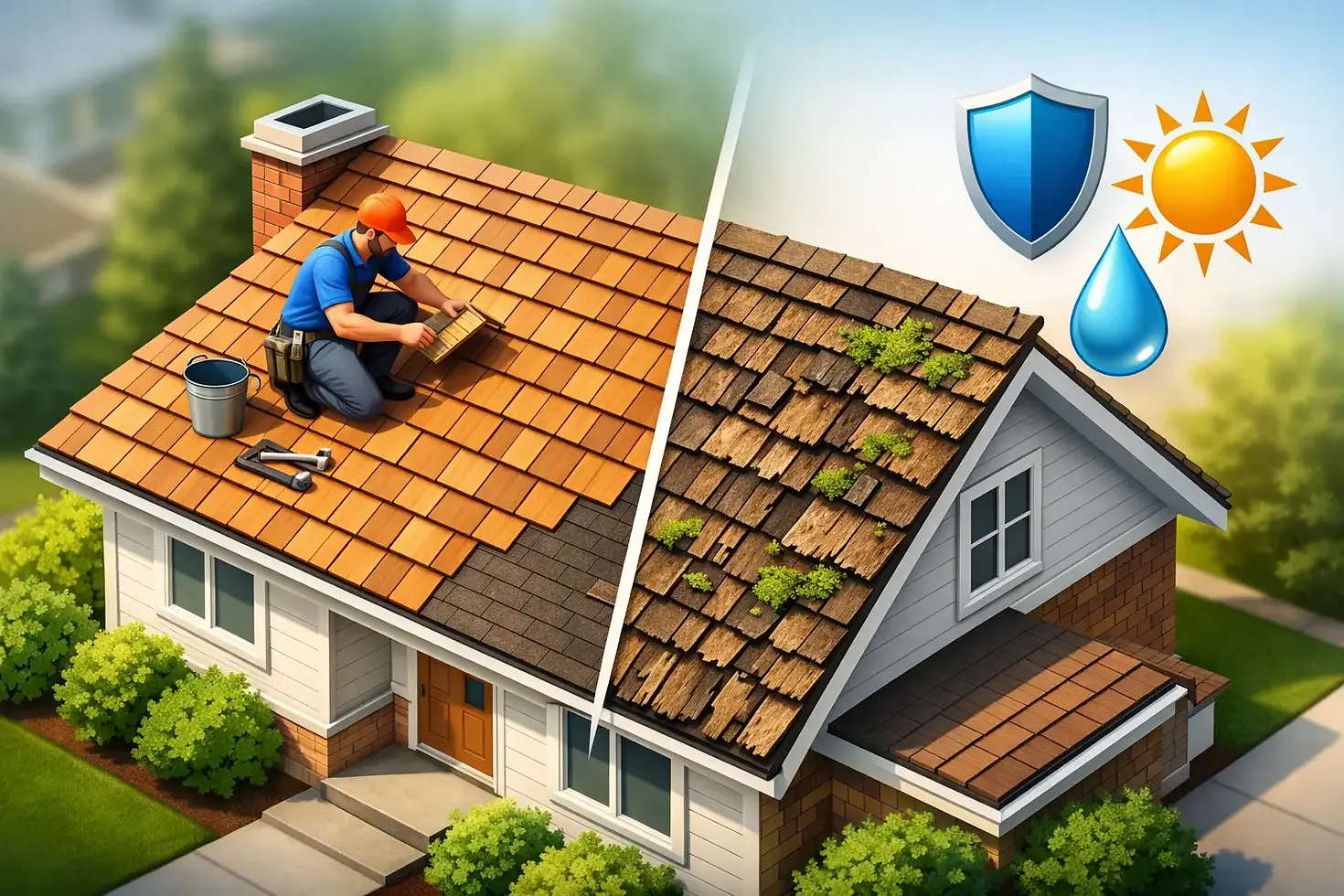
Cedar Shake Roof Maintenance That Prevents Damage
- mirgent gerbolli

- Apr 18
- 6 min read
A cedar shake roof can look outstanding for years, but it does not forgive neglect. Once debris sits in the valleys, moisture gets trapped, shakes start to cup or split, and a small maintenance issue can turn into a leak inside the house. That is why cedar shake roof maintenance is less about appearance and more about protecting the structure underneath.
For homeowners in Suffolk and Nassau County, that matters even more. Salt air, wind-driven rain, heavy humidity, winter freeze-thaw cycles, and storm debris all put extra stress on natural wood roofing. Cedar is durable, but it needs regular attention to stay that way.
Why cedar shake roof maintenance matters
Cedar shakes age differently than asphalt shingles. They are thicker, more textured, and made from natural wood, so they respond to moisture, sun exposure, and airflow in ways manufactured roofing materials do not. A cedar roof can last a long time, but only if it is allowed to dry properly and small issues are caught early.
The biggest threats are usually not dramatic storm failures. More often, the damage starts quietly. Leaves collect along roof edges and valleys. Moss begins to hold moisture against the wood. Flashing around a chimney or skylight starts to fail. A few cracked or loose shakes let water reach the underlayment. By the time stains show up on a ceiling, the repair is usually larger than it needed to be.
Good maintenance helps prevent that chain reaction. It supports the life of the shakes themselves, protects roof decking, reduces the chance of leaks, and helps avoid premature replacement.
What to look for on a cedar shake roof
A cedar roof does not need constant interference, but it does need periodic inspection. From the ground, homeowners can often spot warning signs before they become expensive problems.
Look for dark streaking, green growth, uneven coloration in isolated areas, and shakes that appear lifted, split, curled, or missing. Also pay attention to anything that suggests poor drainage, such as debris buildup near valleys or overflowing gutters. Inside the house, water stains in the attic or on upper-floor ceilings often point to a roofing problem that has been developing for some time.
The surrounding exterior matters too. If gutters are loose or clogged, water can back up at the roof edge. If tree limbs hang over the roof, they can scrape the shakes and drop debris that holds moisture. If chimney flashing is loose or skylight seals are aging, the roof system becomes more vulnerable even if the cedar itself is still in decent shape.
Cedar shake roof maintenance tasks that make the biggest difference
The most effective maintenance is simple, consistent, and done with care. Cedar should be kept clean and able to dry out. That sounds straightforward, but improper cleaning can do as much harm as neglect.
Debris removal is one of the most important tasks. Leaves, pine needles, and small branches should be cleared off the roof surface, especially in valleys and low-drainage areas. When debris stays in place, it traps moisture against the wood and encourages decay.
Gutter cleaning is just as important. A cedar roof depends on proper drainage, and clogged gutters can push water back toward the fascia and lower roof courses. Overflowing water can also affect siding, trim, and the foundation below.
Moss and algae should be addressed early. Light growth may seem cosmetic, but moss acts like a sponge. It keeps the shakes wet longer than they should be, which speeds up deterioration. The right approach depends on the extent of growth. Gentle removal and treatment may be enough in early stages. Aggressive pressure washing is not the answer.
Minor shake repair also matters. Individual shakes that are split, loose, or broken can often be replaced without replacing the whole roof. Timing is important here. A single failed shake is a repair. A cluster of neglected failures can point to broader aging or moisture issues.
What not to do during cedar shake roof maintenance
This is where many homeowners unintentionally shorten the life of the roof. Cedar is tough, but it is still wood. It should not be treated like a hard, nonporous surface.
Pressure washing is one of the most common mistakes. High pressure can erode the surface fibers, force water deeper into the roof system, and damage the shakes or the fasteners holding them in place. Walking carelessly on the roof can also crack or loosen shakes, especially on older roofs.
Chemical treatments need caution as well. Some products marketed for roof cleaning are too harsh for cedar or can affect nearby landscaping. The right treatment depends on the roof’s condition, age, and surrounding environment.
Homeowners should also avoid assuming that a stain or discoloration is harmless. Sometimes it is only surface weathering. Other times it is a sign that moisture is not escaping as it should. Cedar naturally changes color over time, so appearance alone does not tell the whole story. That is why inspection by an experienced roofer can save guesswork.
How often should a cedar shake roof be inspected?
In most cases, cedar roofs should be professionally inspected at least once a year, and also after major storms. For Long Island homes exposed to coastal weather, wind, and seasonal debris, that schedule is practical rather than excessive.
A yearly inspection can identify damaged shakes, failing flashing, moss growth, drainage issues, and early leak points before they spread. After a storm, an inspection is even more important if branches hit the roof, shingles or siding came loose elsewhere on the house, or you notice sudden interior water marks.
Some homes need more attention than others. A property with overhanging trees, limited sun exposure, or a history of drainage issues may need more frequent maintenance than a home with open airflow and minimal debris. That is the trade-off with cedar. It offers character and performance, but site conditions have a real effect on upkeep.
Repairs vs. replacement
Not every problem means the roof is finished. Cedar roofs often remain serviceable for years with targeted repairs and maintenance. Replacing isolated damaged shakes, correcting flashing failures, and cleaning moisture-trapping debris can restore performance if the rest of the roof is in sound condition.
But there is a point where repair stops being cost-effective. If widespread splitting, rot, soft decking, chronic leaks, or repeated patchwork repairs are showing up across multiple sections, replacement may be the smarter investment. Age is part of that decision, but condition matters more. Two cedar roofs installed in the same year can perform very differently depending on ventilation, exposure, workmanship, and maintenance history.
A professional inspection should look beyond the visible surface. The goal is not just to find damaged shakes. It is to evaluate the full roof system, including flashing, underlayment condition where visible, drainage performance, and adjacent components like gutters, chimneys, and skylights.
Why local conditions change the maintenance plan
Cedar roofing in Suffolk and Nassau County faces a specific set of pressures. Coastal moisture can slow drying time. Wind can lift or loosen aged shakes. Winter ice and freeze-thaw movement can widen small cracks. Summer heat and humidity can accelerate wear in shaded or poorly ventilated areas.
That means cedar shake roof maintenance should be based on local exposure, not generic advice. A roof near the water may age differently than one farther inland. A heavily shaded backyard roof slope may hold moisture much longer than a front slope with full sun. Good maintenance planning accounts for those differences.
This is also why exterior systems should be considered together. Roof problems are not always isolated. Overflowing gutters, damaged siding near the roofline, failing chimney masonry, or a leaking skylight detail can all contribute to moisture issues that affect cedar shakes over time.
When to call a professional
If you see cracked or missing shakes, active leaking, moss spread, sagging areas, repeated gutter overflow, or storm-related damage, it is time to have the roof inspected. The same goes for roofs that simply have not been checked in years. Waiting rarely makes cedar problems cheaper.
Professional roof maintenance is not just about climbing up and looking around. It should include a careful assessment of the roof surface, flashing details, drainage, visible structural concerns, and any signs that moisture is getting where it should not. For homeowners who want practical answers instead of guesswork, that inspection is often the most valuable step.
Proper Construction Corp provides roofing inspections, repairs, and maintenance support for homeowners who want to protect the life of their roof before small issues turn into interior damage. If your cedar shake roof has not been evaluated recently, or if a recent storm raised concerns, call for a free estimate and get clear guidance on what the roof needs now and what can wait.
A cedar roof rewards attention. Keep it clean, keep water moving off it, and treat early warning signs seriously, and you give your home a much better chance of staying dry, protected, and ready for the next season.


Comments